Anti-Aging Medicine and Extra Virgin Olive Oil (EVOO)
Share


Buy in


Anti-Aging Medicine and Extra Virgin Olive Oil (EVOO):
The Benefits of Incorporating Natural Polyphenols for Sustainable Health
In the field of Anti-Aging and Preventive Medicine, chronic low-grade inflammation, commonly known as Inflammaging, is considered one of the key factors contributing to premature cellular aging. Choosing healthy fats with powerful antioxidant properties, such as Extra Virgin Olive Oil (EVOO), is therefore more than simply making a dietary choice. It represents a proactive approach to health promotion at the nutraceutical level.
Key Health Benefits of Extra Virgin Olive Oil for Different Body Systems
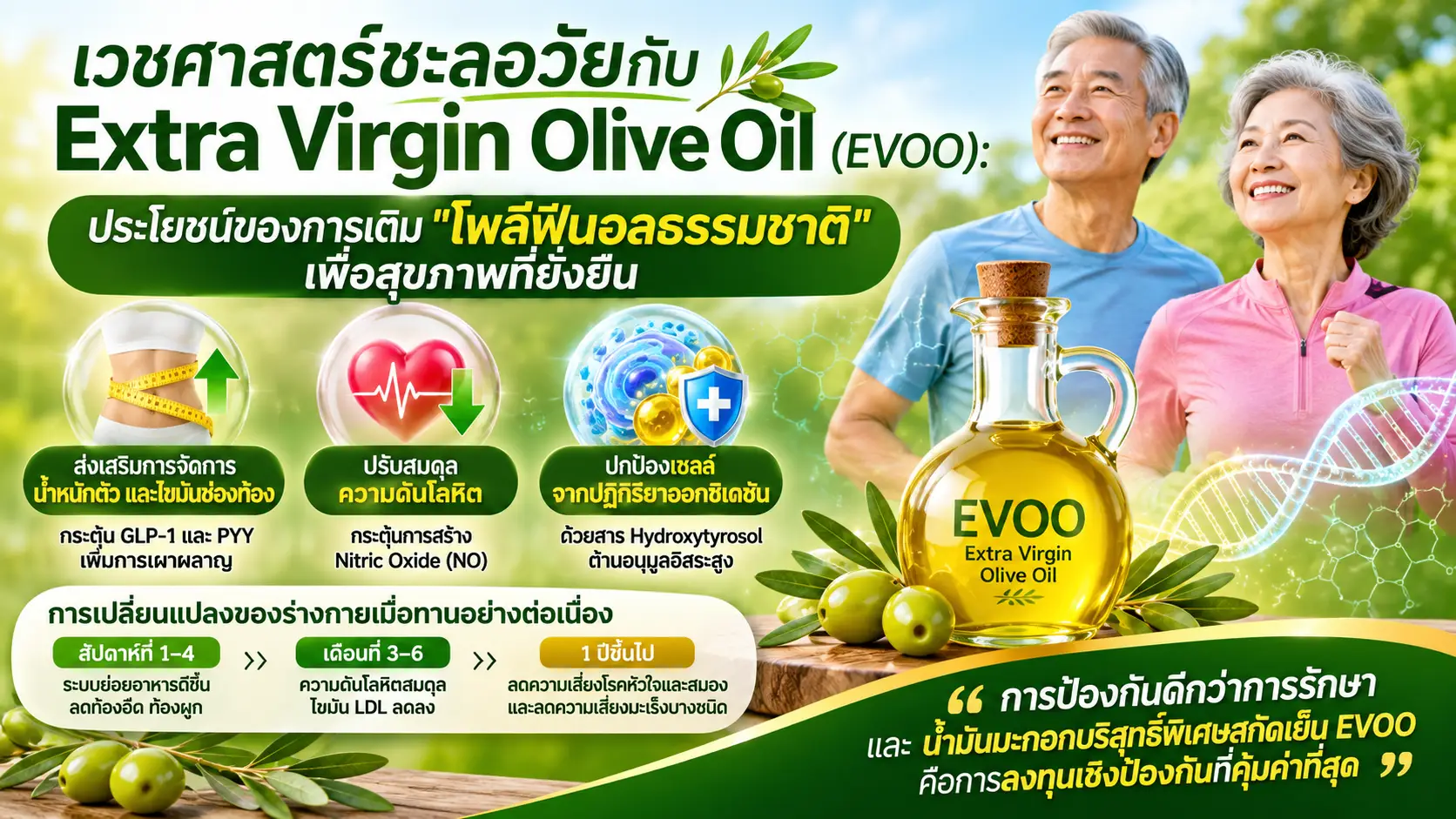
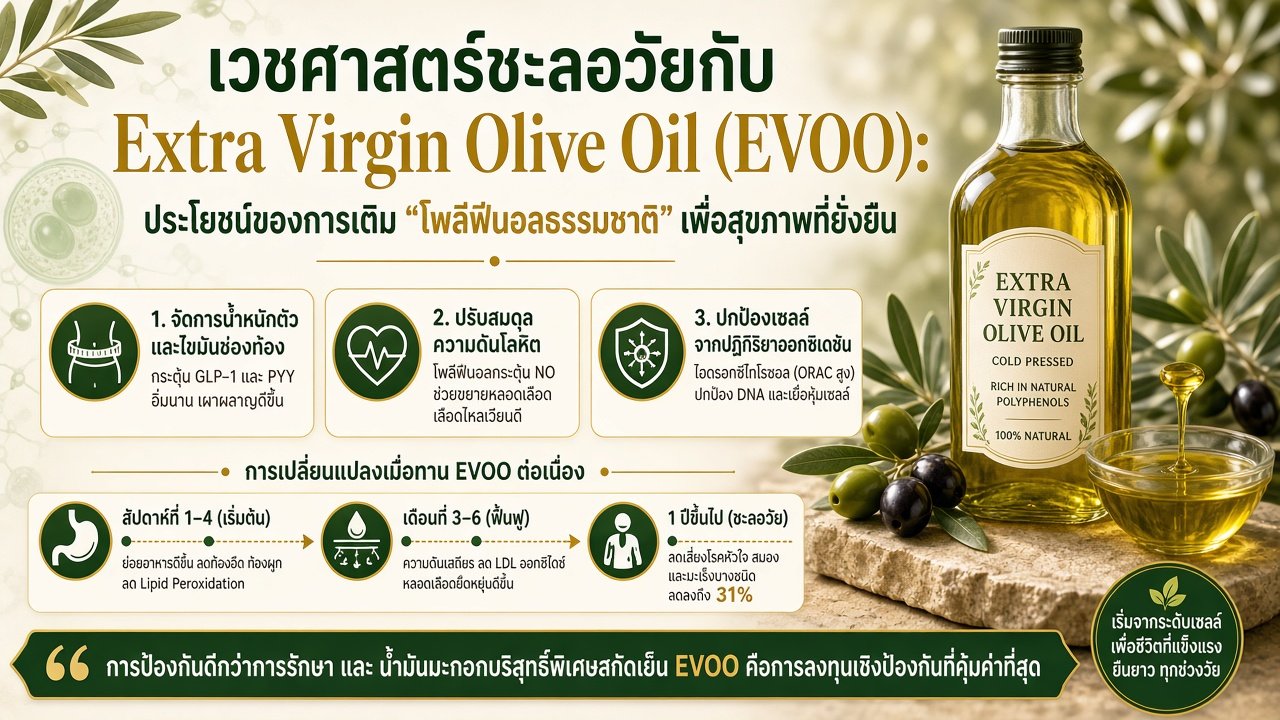
1. Supports Weight Management and Reduces Abdominal Fat
Although Extra Virgin Olive Oil is a source of dietary fat, consuming it in appropriate amounts may help stimulate the release of satiety hormones, including GLP-1 and PYY, which promote feelings of fullness and help maintain satiety for longer.
Research published in the Journal of Nutrition also suggests that olive oil may support metabolic activity through cellular thermogenesis, a process involved in energy expenditure.
2. Helps Maintain Healthy Blood Pressure
Polyphenols found in Extra Virgin Olive Oil may stimulate the production of Nitric Oxide (NO) in the blood vessel walls. This helps promote vasodilation, allowing blood vessels to relax and expand, improving blood circulation and supporting healthy blood pressure levels.
3. Protects Cells Against Oxidative Stress
Hydroxytyrosol, a naturally occurring compound in Extra Virgin Olive Oil, is recognized for its powerful antioxidant properties. It has demonstrated a high Oxygen Radical Absorbance Capacity (ORAC) among naturally derived antioxidant compounds.
This antioxidant activity helps protect cellular structures, including DNA and cell membranes, from damage caused by free radicals and oxidative stress.
How the Body May Change with Consistent Extra Virgin Olive Oil Consumption
Weeks 1–4 (Initial Adaptation Phase)
The digestive and bowel systems may begin to adapt and function more comfortably, potentially helping reduce bloating and constipation. Meanwhile, antioxidants begin contributing to the reduction of lipid peroxidation in the bloodstream.
Months 3–6 (Vascular and Lipid Health Support Phase)
Blood pressure may become more stable, while the oxidation of low-density lipoprotein (LDL), commonly known as bad cholesterol, may be reduced. This can help protect against oxidative damage associated with cholesterol deposits in blood vessel walls and support better vascular flexibility.
One Year and Beyond (Healthy Aging and Chronic Disease Prevention Phase)
Long-term consumption as part of a balanced diet may help reduce the risk of cardiovascular and cerebrovascular events.
A meta-analysis published in the European Journal of Clinical Nutrition reported that regular Extra Virgin Olive Oil (EVOO) consumption was associated with up to a 31% lower risk of certain cancers, including breast and colorectal cancer, compared with non-consumers.
Prevention Is Better Than Cure: EVOO as a Long-Term Investment in Health
"Prevention is better than cure, and Extra Virgin Olive Oil (EVOO) represents one of the most worthwhile investments in preventive health."
From the perspective of Anti-Aging Medicine, true youthfulness and lasting good health begin at the cellular level.
Consistently incorporating polyphenols and high-quality fatty acids from Extra Virgin Olive Oil (EVOO) into the diet is like replenishing the body's natural antioxidant defenses. These compounds may help combat hidden, chronic inflammation (Inflammaging), which is associated with age-related deterioration and the development of serious chronic diseases.
Making Extra Virgin Olive Oil (EVOO) part of your daily lifestyle today is therefore an important step toward maintaining a healthier, longer, and more vibrant life at every stage of aging.
Key References
- Pooja Toshniwal Paharia, Benedette Cuffari, M.Sc. (2025). "Is Olive Oil Good for You? Evidence-Based Health Effects Explained."
https://www.news-medical.net/health/Is-Olive-Oil-Good-for-You-Evidence-Based-Health-Effects-Explained.aspx#1 - Mary Anne Dunkin. (2025). "Exploring the Health Benefits of Olive Oil."
https://mcpress.mayoclinic.org/nutrition-fitness/exploring-the-health-benefits-of-olive-oil/ - Maria D. Mesa, et al. (2024). "Is Extra Virgin Olive Oil the Critical Ingredient Driving the Health Benefits of a Mediterranean Diet? A Narrative Review."
Nutrients.
https://pmc.ncbi.nlm.nih.gov/articles/PMC10346407/ - Covas, M. I., et al. (2006). "The Effect of Polyphenols in Olive Oil on Heart Disease Risk Factors: A Randomized Trial."
Annals of Internal Medicine, 145(5), 333–341. - EFSA Panel on Dietetic Products, Nutrition and Allergies (NDA). (2011). "Scientific Opinion on the Substantiation of Health Claims Related to Olive Oil Polyphenols and Protection of Blood Lipids from Oxidative Stress."
EFSA Journal, 9(4), 2033. - Markellos, C., et al. (2022) / Psaltopoulou, T., et al. "Olive Oil Intake Is Inversely Associated with Cancer Prevalence: A Systematic Review and a Meta-Analysis of 45 Observational Studies."
Frontiers in Oncology / European Journal of Clinical Nutrition. - Martín-Peláez, S., et al. (2017). "Influence of Phenol-Enriched Olive Oils on Human Gut Microbiota."
Nutrients, 9(6), 621.