Deep Dive into 5 Forms of Magnesium: How to Choose the Right One for Your Health Goals

Share


Buy in


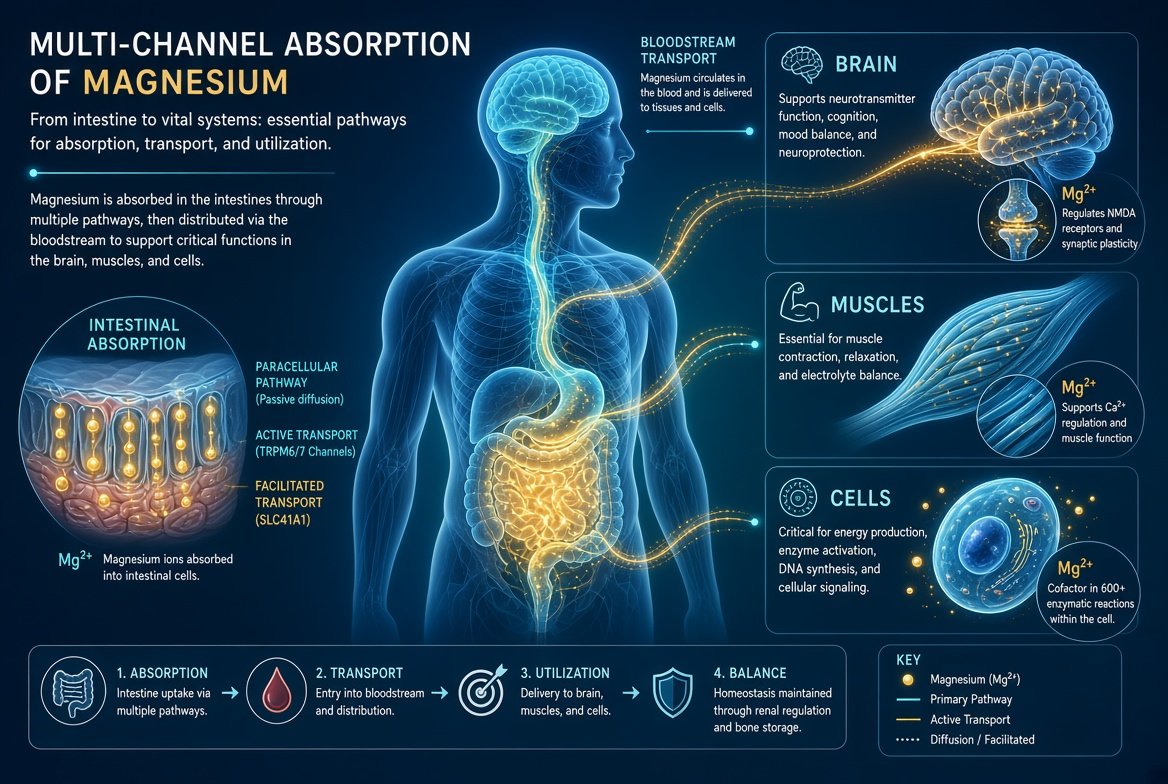
Magnesium is an essential mineral that plays a far more critical role in the body than most people realize. It is involved in nerve function, muscle contraction and relaxation, protein synthesis, blood sugar regulation, and blood pressure control.
However, the main challenge with magnesium supplementation is absorption rate and gastrointestinal tolerability. The form (or salt) to which magnesium is bound is the key factor that determines bioavailability, therapeutic purpose, and the specific advantages and disadvantages of each type.
1. Magnesium Bisglycinate
Best suited for:
- Insomnia, difficulty staying asleep, or frequent night waking
- Chronic stress and anxiety
- Muscle cramps, spasms, and migraine headaches
Key advantages:
- High bioavailability: One of the most absorbable forms; absorption is not significantly hindered by phytates in food
- Excellent gastrointestinal tolerance: Rarely causes diarrhea or stomach irritation (gentle on the stomach)
- Synergistic effect: Provides the benefits of both magnesium and the calming amino acid glycine
2. Magnesium Oxide
Best suited for:
- Chronic constipation
- Excess stomach acid / heartburn / hyperacidity
Key advantages:
- High elemental magnesium content: Delivers a large amount of elemental magnesium per tablet, so pill size can remain relatively small
- Cost-effective: Inexpensive and widely available
3. Magnesium Amino Acid Chelate (Magnesium AAC)
Best suited for:
- General daily magnesium support
- Mild magnesium deficiency due to inadequate diet
- Muscle cramps, calf cramps, or tingling / numbness
Key advantages:
- Stable absorption: Typically absorbed 2–3 times better than common inorganic salts
- Lower gastrointestinal side effects
- Versatility: Useful for both muscle and basic nervous system support
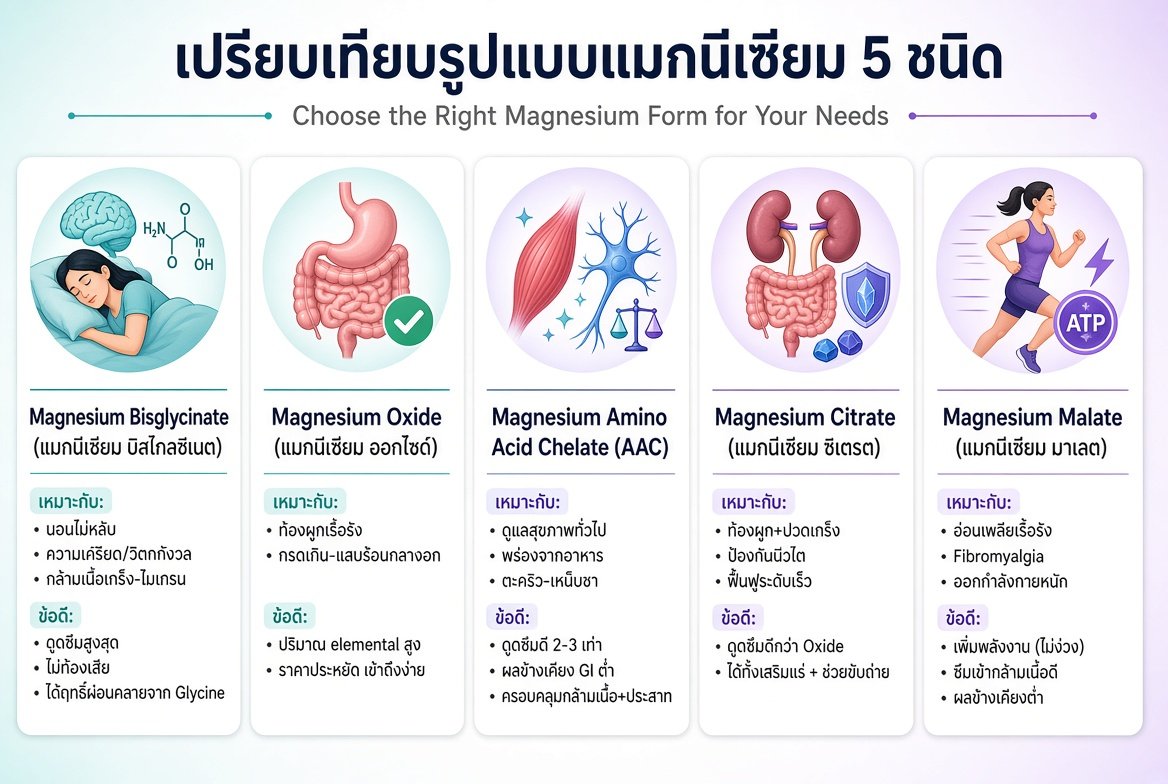
4. Magnesium Citrate
Best suited for:
- Constipation accompanied by muscle cramps
- Prevention of calcium oxalate kidney stones (citrate inhibits crystal formation)
- Rapid restoration of blood magnesium levels
Key advantages:
- Well-researched bioavailability: Clearly superior absorption compared with magnesium oxide
- Dual action: Provides both mineral supplementation and mild laxative effect that helps normalize bowel movements
5. Magnesium Malate
Best suited for:
- Chronic Fatigue Syndrome (CFS)
- Fibromyalgia
- Heavy exercise and daytime muscle fatigue
Key advantages:
- Energy-supporting: Does not promote drowsiness; suitable for morning use or pre-workout
- High tissue penetration: Excellent absorption into muscle cells and tissues
- Gentle: Low incidence of diarrhea
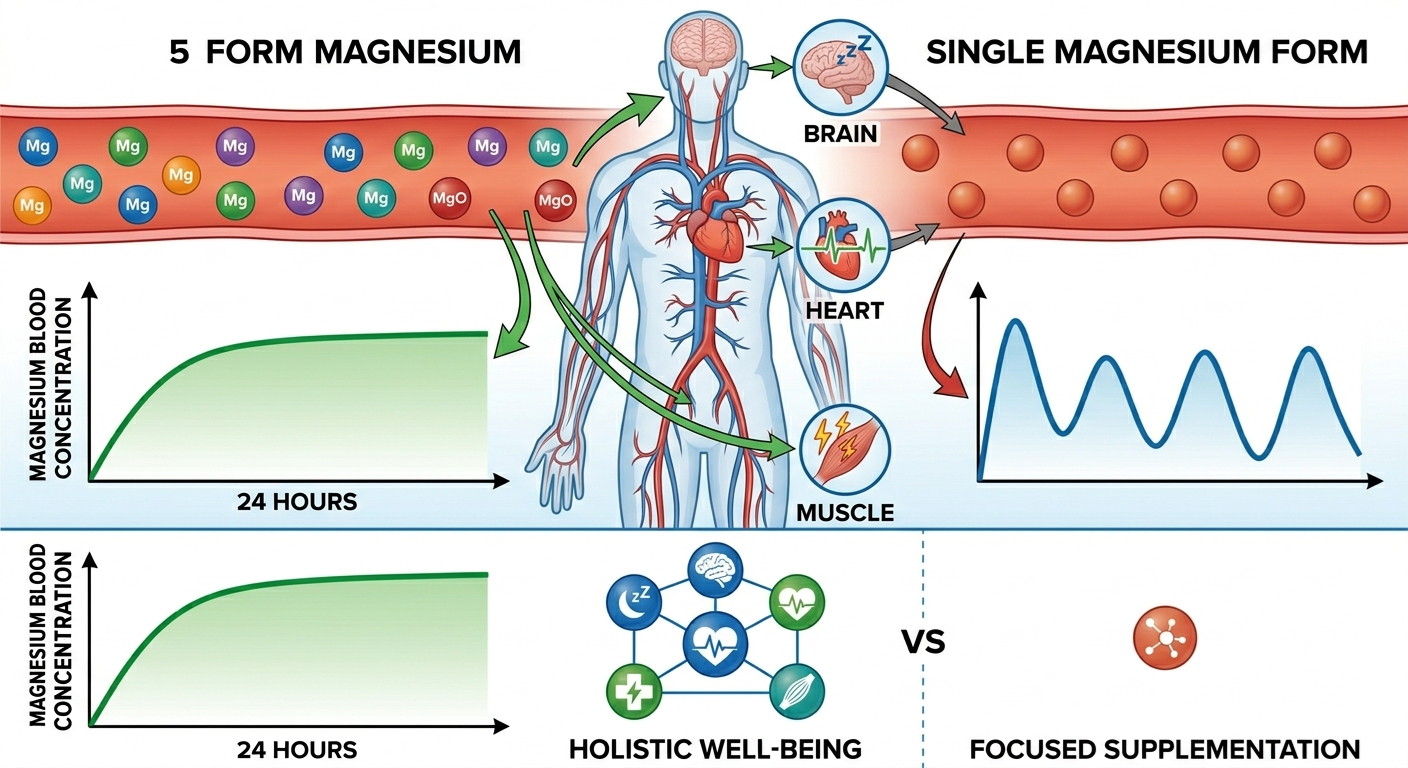
Advantages of a Multi-Form Magnesium Complex (Combining All 5 Forms)
Taking a single form of magnesium often addresses only one specific goal. Combining Magnesium Bisglycinate, Oxide, AAC, Citrate, and Malate in one formula creates a synergistic effect that is superior to any single form. The main benefits are:
1. Multi-Channel Absorption Synergy The intestine has limited capacity for absorption through any single pathway (transporter saturation). Using multiple forms solves this problem:
- Bisglycinate & AAC → absorbed via amino acid / peptide transporters (e.g., PEPT1)
- Citrate & Malate → absorbed via passive diffusion and ion channels
- Oxide → slowly releases free magnesium in acidic conditions
This parallel absorption significantly increases total uptake, provides more consistent blood levels, and avoids intestinal transporter saturation.
2. Comprehensive Target Tissue Delivery Different tissues require magnesium for different purposes. A five-form complex delivers magnesium across multiple systems in a single capsule:
- Brain & nervous system → Bisglycinate (supports GABA activity)
- Cellular energy production → Malate (participates in the Krebs cycle inside mitochondria)
- Digestive system & bowel regularity → Citrate and Oxide
- Muscles, bones & blood vessels → AAC and organic salts for repair and relaxation
3. Optimized Gastrointestinal Tolerance High-dose single-form magnesium (especially Oxide or Citrate) frequently causes osmotic diarrhea. Combining five forms dilutes the proportion of the more laxative salts while increasing the share of gentle chelated forms (Bisglycinate / AAC). The result is a high elemental magnesium dose with minimal stomach irritation or diarrhea.
4. Natural Sustained-Release Effect Each form has a different dissolution and absorption rate:
- Fast-acting: Citrate and Malate
- Moderate-acting: Bisglycinate and AAC
- Slow-acting: Oxide
Together they create a natural time-release profile, maintaining more stable blood magnesium levels throughout the day without sharp spikes and drops.
5. Cost-Efficiency & High Elemental Load Pure chelated forms (e.g., Bisglycinate alone) result in large tablets with relatively low elemental magnesium. Including an appropriate amount of Magnesium Oxide increases the total elemental magnesium per dose, allowing patients to meet daily targets without taking multiple large pills — improving both compliance and cost-effectiveness.
References
- Schuette, S. A., Lashner, B. A., & Janghorbani, M. (1994). Bioavailability of magnesium diglycinate vs magnesium oxide in patients with ileal resection. JPEN. Journal of Parenteral and Enteral Nutrition, 18(5), 430–435.
- Firoz, M., & Graber, M. (2001). Bioavailability of US commercial magnesium preparations. Magnesium Research, 14(4), 257–262.
- Walker, A. F., Marakis, G., Christie, S., & Byng, M. (2003). Mg citrate found more bioavailable than other Mg preparations in a randomised, double-blind study. Magnesium Research, 16(3), 183–191.
- Abraham, G. E., & Flechas, J. D. (1992). Management of Fibromyalgia: Rationale for the Use of Magnesium and Malic Acid. Journal of Nutritional Medicine, 3(1), 49–59.
- Uysal, N., et al. (2019). Timeline (Bioavailability) of Magnesium Compounds in Hours: Which Magnesium Compound Works Best? Biological Trace Element Research, 187(1), 128–136.
- Ranade, V. V., & Somberg, J. C. (2001). Bioavailability and pharmacokinetics of magnesium preparations. American Journal of Therapeutics, 8(5), 345–357.
- Siebrecht, S. (2013). Magnesium Bisglycinate: Providing superior bioavailability and gastrointestinal tolerance. OM & Ernährung, 144, 1–16.