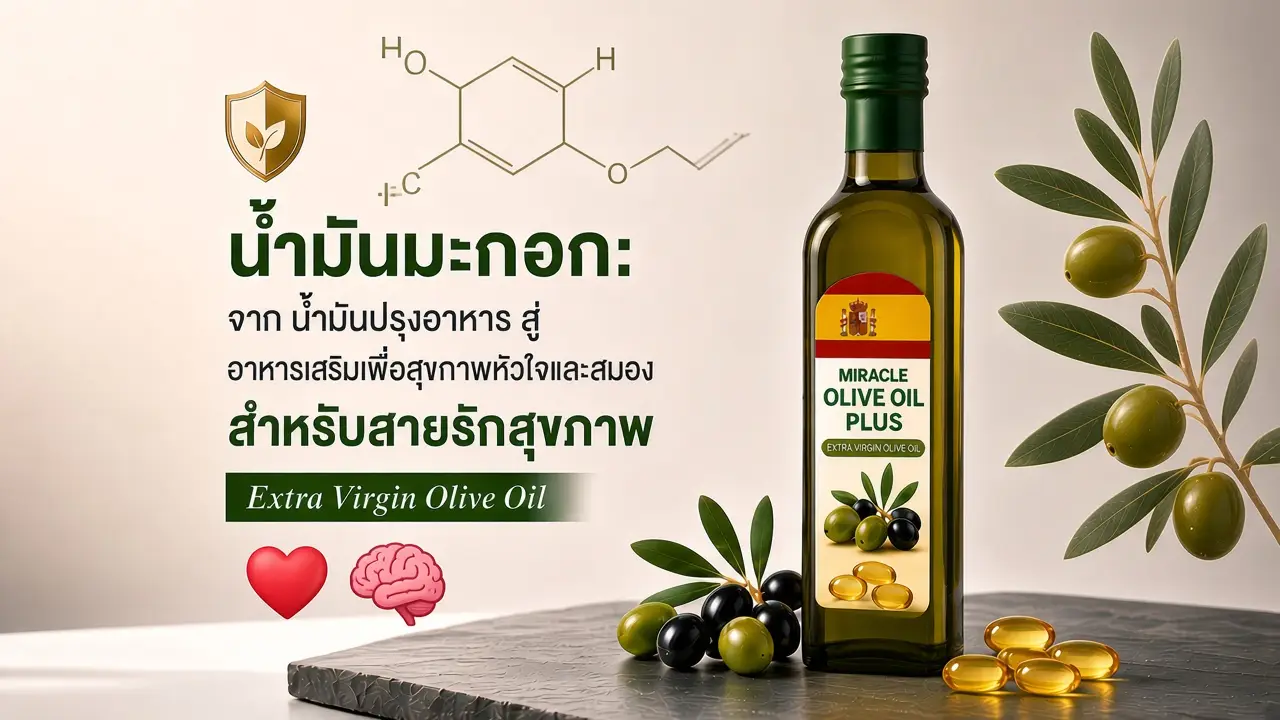
Olive Oil: From “Cooking Oil” to “Heart and Brain Health Supplement for Health Enthusiasts”
Share


Buy in


In the field of nutraceuticals, olive oil—particularly Extra Virgin Olive Oil (EVOO)—is no longer regarded merely as a household cooking ingredient. It is now internationally recognized as a highly effective health supplement due to its rich content of bioactive compounds that deliver systemic benefits to the body.

The Remarkable Components of Olive Oil
High-quality cold-pressed olive oil consists of two primary groups of beneficial compounds:
- Monounsaturated Fatty Acids (MUFA) Especially oleic acid, which helps lower “bad” cholesterol (LDL) while maintaining “good” cholesterol (HDL) levels in the blood.
- Phenolic Compounds Such as oleocanthal and hydroxytyrosol. These act as powerful antioxidants with notable anti-inflammatory effects at the cellular level.
Medically Confirmed Health Benefits
1. Cardiovascular Protection Regular consumption of olive oil significantly reduces the risk of heart disease and cardiovascular events. A landmark study published in The New England Journal of Medicine (the PREDIMED Study) confirmed that a Mediterranean-style diet rich in extra virgin olive oil can reduce the risk of major cardiovascular events by up to 30%. Key mechanisms include improved insulin sensitivity and reduced inflammation of the blood vessel walls.
2. Anti-Inflammatory Effects Comparable to Pharmaceuticals From a pharmacological perspective, oleocanthal found in cold-pressed olive oil inhibits the enzymes COX-1 and COX-2 in a manner similar to non-steroidal anti-inflammatory drugs (NSAIDs) such as ibuprofen. This helps reduce chronic inflammation in the body without the gastrointestinal side effects commonly associated with conventional medications.
3. Brain Health Support and Slowing Cognitive Decline Research published in the Journal of Alzheimer’s Disease indicates that the phenolic compounds in olive oil protect brain cells from free-radical damage and promote the clearance of abnormal proteins linked to Alzheimer’s disease. As a result, olive oil extracts are now being developed into softgel supplements targeted at older adults.
Key Considerations When Using Olive Oil as a Dietary Supplement
- Choose Extra Virgin grade only It must be first cold-pressed oil that has not been exposed to heat or chemicals, in order to preserve the maximum amount of antioxidants.
- Proper storage Olive oil is sensitive to light and temperature. When formulated as capsules, the manufacturing process must effectively prevent oxidation.
- Recommended intake In general, an amount equivalent to 1–2 tablespoons of fresh olive oil per day is sufficient to support health benefits.
Olive oil is far more than just a fat—it is a concentrated source of phytochemicals that function as safe and powerful preventive medicine. When sourced from standardized products processed with proper extraction methods, it becomes an excellent long-term choice for protecting heart and brain health.
Primary References:
- Estruch, R., et al. (2013). "Primary Prevention of Cardiovascular Disease with a Mediterranean Diet." The New England Journal of Medicine.
- Parkinson, L., & Keast, R. (2014). "Oleocanthal, a Phenolic Derived from Virgin Olive Oil: A Review of the Beneficial Effects on Inflammatory Disease." International Journal of Molecular Sciences.
- Qiu, W. Q., et al. (2013). "Oleocanthal and hydroxytyrosol-rich olive oil extracts enhance amyloid-beta clearance from the brain." Journal of Alzheimer's Disease.