Unlocking the Power of Extra Virgin Olive Oil (EVOO)
Share


Buy in


Unlocking the Power of Extra Virgin Olive Oil (EVOO)
Why Should This “Healthy Fat” Be Part of Your Daily Diet?
As people become increasingly health-conscious, the role of dietary fats has become a widely discussed topic. Among them, Extra Virgin Olive Oil (EVOO) has gained considerable attention as a key source of beneficial nutrients in the Mediterranean diet.
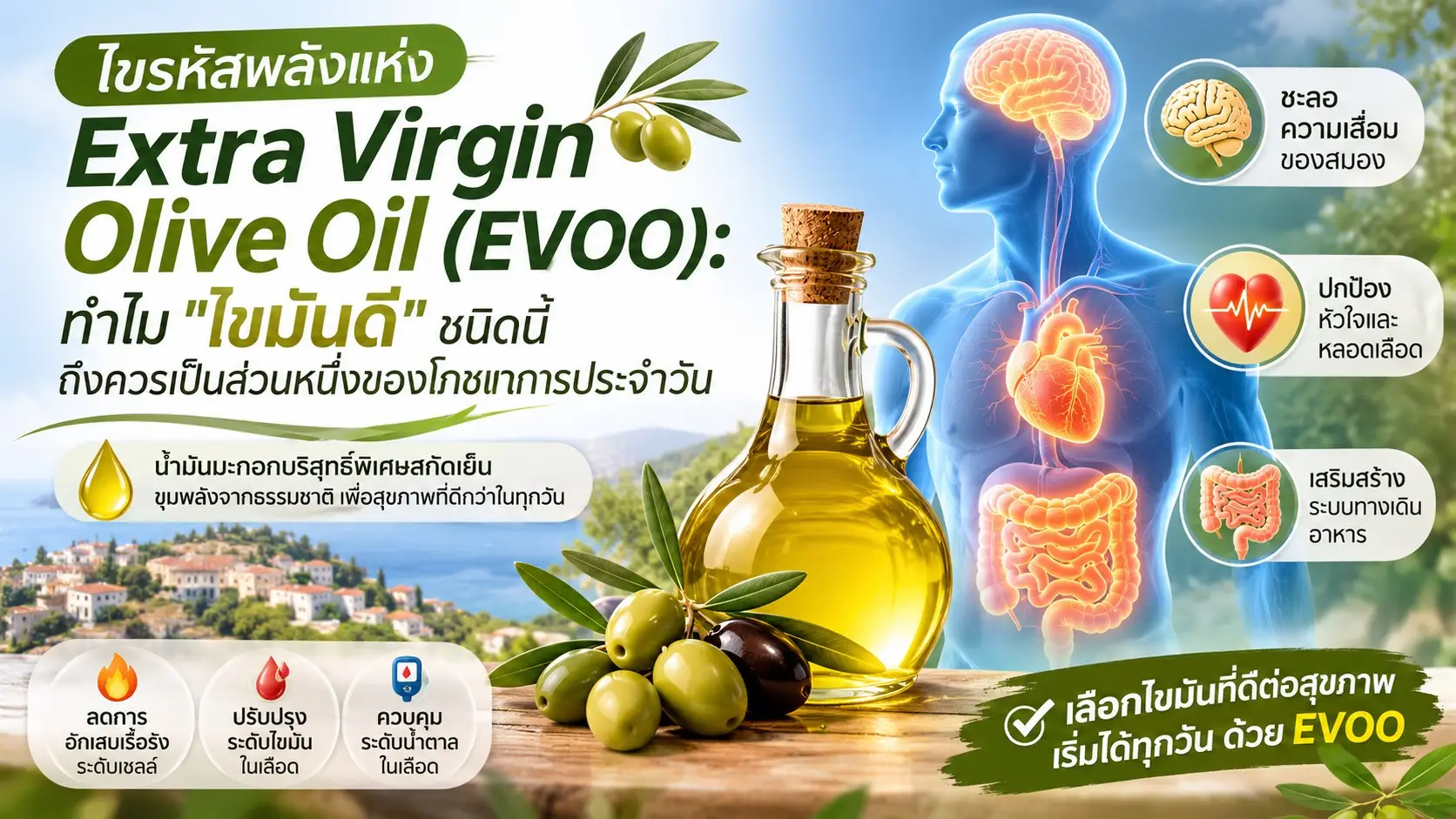
Extra Virgin Olive Oil is not just another cooking oil. It can be thought of as the fresh juice of olives, obtained through mechanical extraction without the use of chemical solvents. When produced and stored properly, EVOO retains a wide range of beneficial bioactive compounds that contribute to its nutritional value.
Why Should You Consider Adding Extra Virgin Olive Oil to Your Daily Diet?
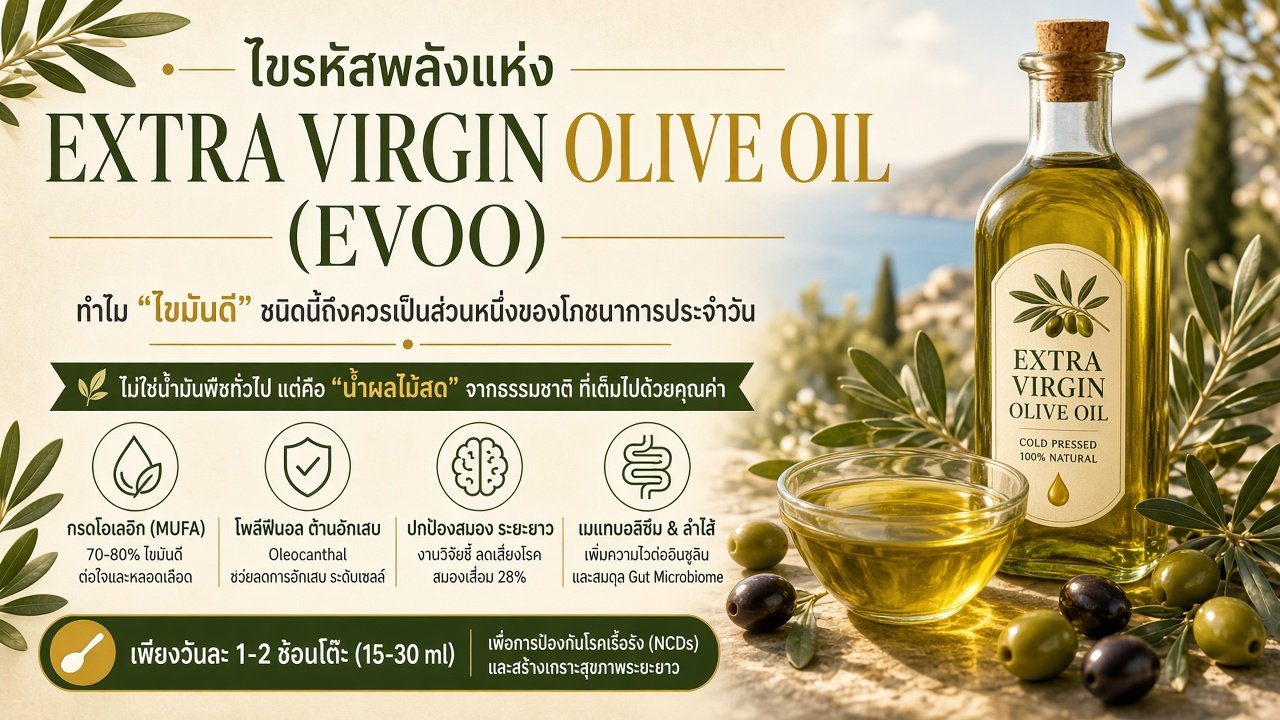
The nutritional profile of Extra Virgin Olive Oil is characterized by a high concentration of oleic acid, a monounsaturated fatty acid (MUFA) that typically accounts for approximately 70–80% of its total fatty acids. EVOO also contains plant-derived compounds known as polyphenols, including oleocanthal and hydroxytyrosol, which have antioxidant properties.
Consuming approximately 1–2 tablespoons (15–30 mL) of EVOO per day may support several aspects of health as part of a balanced diet.
Supporting the body's inflammatory response: Oleocanthal, a naturally occurring compound in EVOO, has been shown in laboratory studies to inhibit the COX-1 and COX-2 enzymes through a mechanism similar to that of the anti-inflammatory medication ibuprofen. However, this does not mean that EVOO has the same clinical effects as ibuprofen or can replace medical treatment. Its potential role in supporting a healthy inflammatory response continues to be an area of scientific interest.
Supporting cardiovascular health: The PREDIMED clinical trial, published in The New England Journal of Medicine, found that a Mediterranean diet supplemented with extra virgin olive oil was associated with an approximately 30% lower risk of major cardiovascular events compared with the control diet in the study population. These findings highlight the potential cardiovascular benefits of an overall Mediterranean-style dietary pattern rather than proving that EVOO alone produces the same effect.
Supporting healthy blood lipid levels: Replacing saturated fats with monounsaturated fats may help improve blood lipid profiles. EVOO polyphenols may also help protect LDL cholesterol from oxidative damage. HDL cholesterol plays an important role in cholesterol transport, although the overall effect depends on dietary patterns and individual health factors.
What Happens When You Consume Extra Virgin Olive Oil Regularly?
Making EVOO part of a balanced diet may contribute to long-term health in several ways.
Brain and nervous system health: Research from Harvard T.H. Chan School of Public Health, published in JAMA Network Open in 2024, examined olive oil consumption and dementia-related mortality among US adults. The study found that consuming more than 7 grams of olive oil per day was associated with a 28% lower risk of dementia-related death compared with people who rarely or never consumed olive oil. This was an observational finding and does not establish that olive oil directly prevents Alzheimer's disease or other forms of dementia.
Blood sugar regulation and metabolic health: Monounsaturated fatty acids and polyphenols are being studied for their potential roles in insulin sensitivity and glucose metabolism. A Mediterranean-style diet may help support metabolic health and reduce the risk of type 2 diabetes. However, the effects depend on the overall dietary pattern, and the benefits of EVOO alone should not be overstated.
Digestive health and the gut microbiome: Dietary fats and plant-derived compounds can influence the gut environment. Research is exploring how olive oil polyphenols may interact with gut microorganisms and support a healthy intestinal environment. However, EVOO should not be described as a proven prebiotic that reliably increases specific beneficial bacteria, such as Lactobacillus and Bifidobacterium, in every individual. Further research is needed to clarify these effects in humans.
“Fat Is Not as Frightening as It Seems When You Choose the Right Kind”
Building a Foundation for Sustainable Health
Improving your health does not necessarily mean eliminating everything from your diet. Often, it begins with making better choices.
Extra Virgin Olive Oil is more than a culinary ingredient. As part of a balanced Mediterranean-style diet, it provides monounsaturated fatty acids and naturally occurring polyphenols that may contribute to cardiovascular and overall metabolic health.
Choosing EVOO in place of some sources of saturated fat, while maintaining a balanced diet and an active lifestyle, can be a practical step toward long-term well-being.
Rather than viewing EVOO as a cure or a guaranteed shield against chronic noncommunicable diseases (NCDs), it is more accurate to recognize it as one valuable component of a broader, evidence-informed approach to healthy living.
Key References
- Cleveland Clinic. (2024). “6 Major Benefits of Extra Virgin Olive Oil.” Health Essentials. https://health.clevelandclinic.org/benefits-of-olive-oil
- Beauchamp, G. K., et al. (2005). “Phytochemistry: Ibuprofen-like activity in extra-virgin olive oil.” Nature, 437(7055), 45–46.
- Estruch, R., et al. (2018). “Primary Prevention of Cardiovascular Disease with a Mediterranean Diet Supplemented with Extra-Virgin Olive Oil or Nuts.” The New England Journal of Medicine, 378(25), e34.
- Tessier, A. J., et al. (2024). “Consumption of Olive Oil and Risk of Dementia-Related Mortality Among US Adults.” JAMA Network Open, 7(5), e2410014.
- Salas-Salvadó, J., et al. (2014). “Prevention of Diabetes With Mediterranean Diets: A Subgroup Analysis of a Randomized Trial.” Annals of Internal Medicine, 160(1), 1–10.
Medical and nutritional note: The health effects described above are based on scientific research on olive oil, its components, and dietary patterns. Individual outcomes vary. EVOO is a food, not a medicine, and should not replace prescribed treatment or professional medical advice.